Let’s be honest. For a long time, sales enablement was seen as, well, a sales thing. Its job was to arm the frontline with battle cards and product sheets so they could close that initial deal. Once the contract was signed, everyone moved on. Customer success took over, and sales went hunting for the next logo.
That model is broken. In today’s subscription economy, the real game isn’t just about landing the customer. It’s about keeping them, growing them, and turning them into advocates. And to do that, you need to blur the lines. You need sales enablement to play a starring role in customer success and expansion revenue. Here’s the deal.
Why sales enablement can’t stop at the signature
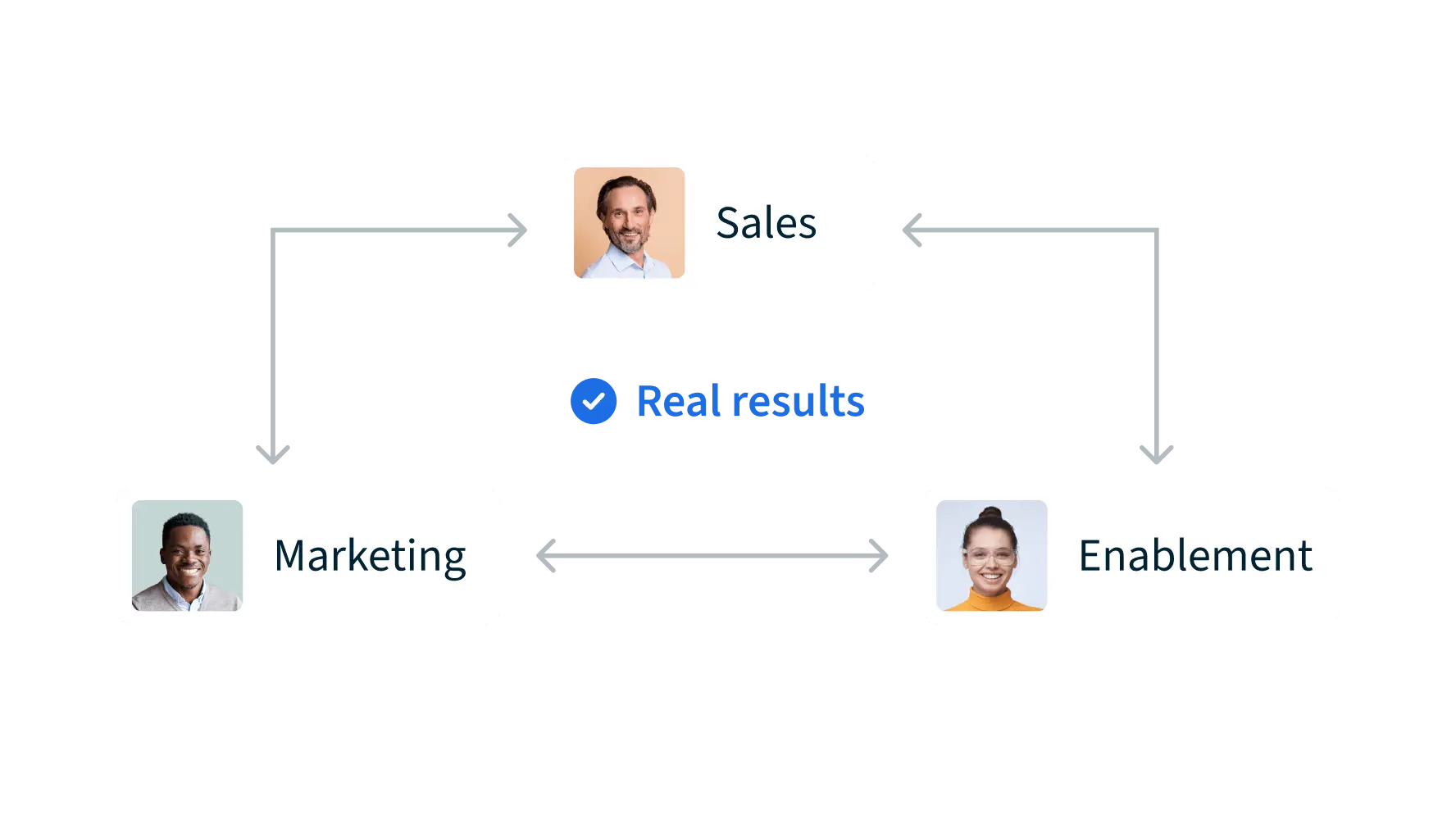
Think of your customer’s journey not as a straight line, but as a loop. A virtuous cycle. The initial sale is just the first conversation in what should be a long, productive partnership. If the messaging, tools, and knowledge that got them in the door vanish post-sale, you create a jarring disconnect. The customer feels it.
Suddenly, the smooth-talking account executive is gone, and the customer success manager is starting from scratch, explaining basics the customer thought they already understood. It’s frustrating. It wastes time. And it kills momentum—the exact momentum you need to drive adoption, demonstrate value, and find expansion opportunities.
The handoff shouldn’t feel like a drop-off
This is where enablement becomes the glue. A modern sales enablement function owns the consistency of the customer experience across all touchpoints. That means ensuring the narrative from first contact to tenth renewal is coherent, value-focused, and seamless.
When sales and success are reading from the same playbook—a playbook enablement wrote and maintains—the customer feels understood, not handed off. They see a unified team invested in their goals. That trust is the bedrock of expansion.
Fueling expansion: Enablement as the intelligence engine
Okay, so alignment is good. But how does enablement actively drive expansion revenue? It shifts from being a content warehouse to becoming a central intelligence hub. Here’s what that looks like in practice.
1. Arming CSMs with “commercial” confidence
Customer Success Managers are often phenomenal at relationships and product expertise. But asking for more budget? Navigating a complex multi-threaded upsell? That can feel… salesy. And if it feels awkward for them, it feels awkward for the customer.
Sales enablement bridges this gap. They provide tailored training on commercial conversations. Not hard closes, but value-based discussions. They create enablement content specifically for expansion scenarios:
- Expansion playbooks: “When you see X usage pattern, here’s how to frame the conversation about Y premium feature.”
- ROI calculators and case studies: Tangible proof for the CSM to use in a value review.
- Competitive insight for retention: Knowing why a customer might look elsewhere and how to counter it—before it’s a crisis.
This isn’t about turning CSMs into AEs. It’s about empowering them to recognize and confidently act on growth opportunities that naturally arise from their work.
2. Closing the feedback loop (the real goldmine)
Customer Success has the richest data imaginable. They hear every day what’s working, what’s not, what features clients beg for, and where competitors are nipping at your heels. If that intel stays siloed, you’re missing out.
Enablement should be the conduit that funnels this frontline feedback directly back to marketing, product, and sales. This intelligence allows for:
| Feedback Source | Enablement Action | Impact on Revenue |
| CSMs report clients consistently misuse a feature | Create new onboarding guides & training for both new and existing clients. | Increases adoption, reduces churn risk, clears path for expansion. |
| Success teams identify a common pain point a new feature solves | Develop a targeted “solution spotlight” campaign for the install base. | Creates a clear, timely upsell path based on proven need. |
| Customers ask for integrations you already have | Update battle cards and sales decks to highlight these “hidden” capabilities. | Unlocks immediate expansion revenue from current users. |
The tools and mindset shift required
Making this work isn’t just about good intentions. It requires a deliberate shift in strategy and, honestly, in tools. Your enablement platform can’t be a sales-only fortress. It needs to be a shared workspace.
- Shared Content Repositories: CSMs need instant, easy access to the latest case studies, pitch decks, and ROI tools—the same ones sales uses.
- Integrated Communication: Use channels where sales and success can easily share win stories, loss reasons, and customer insights. Slack channels, regular syncs—whatever works.
- Metrics that Matter: Start measuring enablement’s impact beyond just sales cycle length. Look at net revenue retention (NRR), expansion deal velocity, and even customer health scores. That’s the true north star.
A thought to leave you with
The most successful companies today don’t see a boundary between acquiring a customer and growing one. The conversation simply… evolves. Sales enablement is the critical force that ensures that evolution is natural, informed, and relentlessly focused on value.
When you empower every customer-facing team with the same insights, tools, and language, you stop having transactions and start building partnerships. And in those partnerships, growth isn’t a sales pitch—it’s the next logical step. That’s where the real revenue lives.