Let’s be honest. The sales and marketing feud is a tired old story. Marketing feels sales ignores their hard-won leads. Sales thinks marketing sends them junk. It’s a classic blame game that drains energy and, frankly, revenue.
But what if you could turn that tension into a powerhouse of collaboration? The secret lies in two intertwined concepts: shared attribution and account-based frameworks. When you weave these together, you stop fighting over credit and start focusing on shared revenue goals. Here’s the deal—let’s dive in.
Why the Old “MQL vs. SQL” Model Is Breaking Down
For years, we’ve lived in a world of Marketing Qualified Leads (MQLs). Marketing throws leads over the fence, sales picks them up (or doesn’t), and the handoff is… messy. The problem? This model incentivizes volume over value. Marketing churns out leads to hit a number, while sales chases anything that moves, often missing the bigger picture.
In today’s complex B2B landscape, buying decisions involve committees, not individuals. A single lead is just one voice in a chorus. Relying on a linear, lead-centric attribution model is like trying to navigate a highway with a bicycle map—it just doesn’t fit the terrain anymore.
The Foundation: Shared Attribution as a Common Language
Shared attribution isn’t just a fancy report. It’s a common language. It’s the agreement that both teams get credit for influencing revenue, regardless of who “touched” the lead last. This shifts the conversation from “my leads” to “our customers.”
Moving Beyond Last-Click Thinking
Last-click attribution gives all the credit to the final touchpoint before a deal closes. It’s simplistic and, well, unfair. Did that sales call really close the deal, or was it the webinar six months prior, the case study, and the nurture emails that built the trust?
A shared model looks at the whole journey. Think multi-touch attribution. This could be a simple model like first-touch, lead-creation-touch, and opportunity-creation-touch, all splitting the pie. The goal is visibility. When marketing sees how their top-of-funnel content contributes to late-stage deals, and sales understands the role of brand awareness, alignment begins.
The Engine: Account-Based Frameworks for Focus
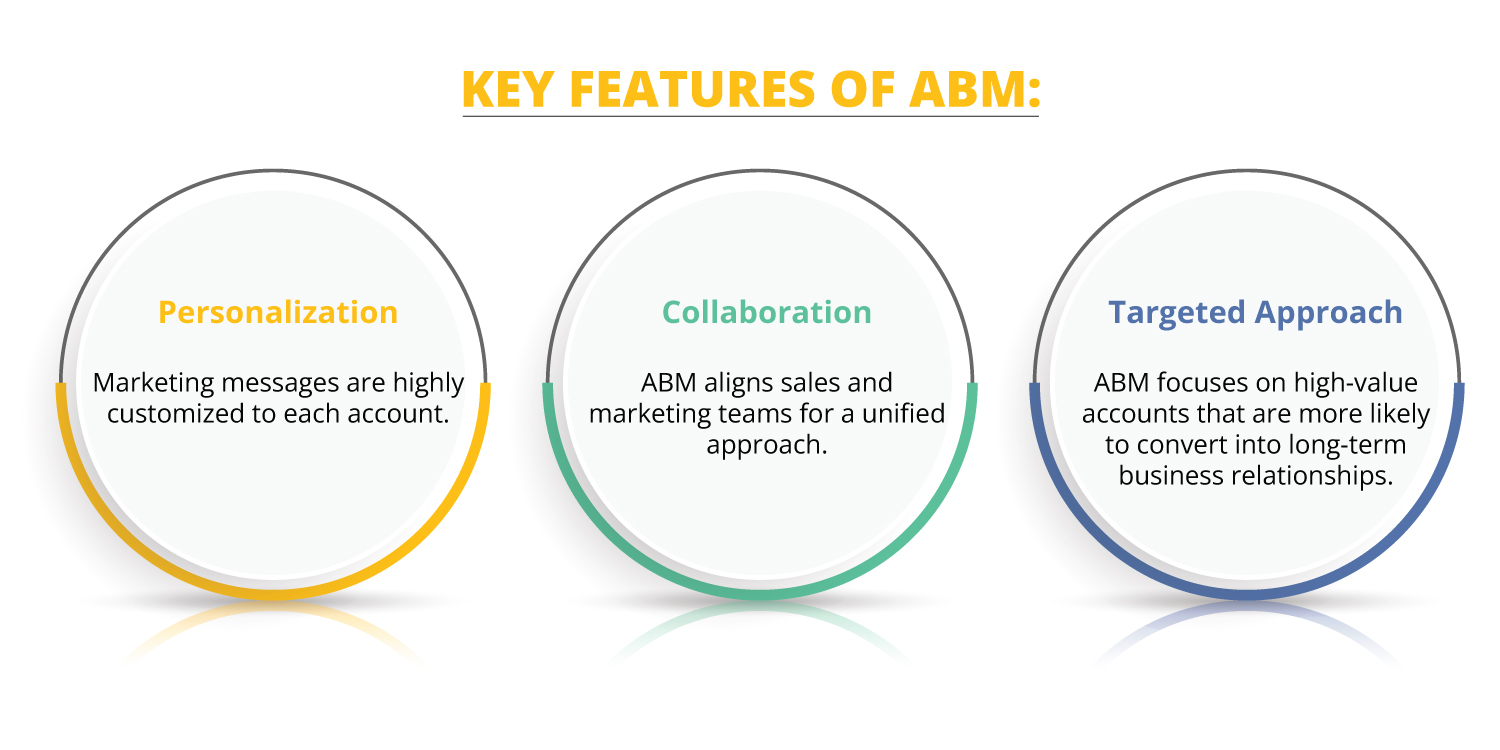
Now, layer in an account-based framework. If shared attribution is the language, ABM is the shared strategy. It forces both teams to look at the same list of target accounts and say, “Okay, how do we win this company together?”
It’s a shift from spray-and-pray to sniper focus. You’re not just generating a lead; you’re engaging an account. This is where the magic happens.
Practical Strategies to Weave It All Together
So, how do you actually do this? It’s not about flipping a switch. It’s a process. Here are some concrete steps.
1. Build a Unified Account List (The “Who”)
Sales and marketing must co-create the target account list. Use both data-driven insights (firmographics, technographics, intent data) and sales intuition (relationship maps, competitive footholds). This joint ownership is non-negotiable.
2. Define Shared Metrics and Goals (The “Scorecard”)
Forget MQL targets. Start measuring what matters to the business:
- Account Engagement Score: A combined metric tracking activity across marketing and sales touches within a target account.
- Pipeline Generated from Target Accounts: The value of opportunities created from your agreed-upon list.
- Account Coverage: Percentage of target accounts with known contacts and engagement plans.
- Influence Revenue: The revenue both teams can claim credit for through your multi-touch attribution model.
3. Implement “Smarketing” Campaigns (The “How”)
For each tier of accounts, run integrated plays. For example:
| Marketing Action | Sales Action | Shared Attribution Point |
| Launch a targeted ad campaign to accounts showing intent data for “cloud security.” | Sales uses the ad engagement list to prioritize outbound calls, referencing the ad content. | Both teams get credit for the “engagement touch” in the account’s timeline. |
| Host a personalized webinar for a strategic account. | Account executive invites key stakeholders and follows up with a tailored deck based on Q&A. | Revenue from this account is attributed to the “campaign” (both teams). |
4. Create a Single Source of Truth (The “Where”)
You need one platform—usually your CRM layered with ABM and attribution tools—where everything lives. Both teams must live here. Deal stages, content interactions, email opens, call notes… it all feeds a holistic account view. This kills the “data silo” problem dead.
The Human Hurdles (And How to Clear Them)
Technology is the easy part. The real challenge is people and process. You’ll face resistance. “This is how we’ve always done it.” Here’s how to get past it.
Start with a pilot. Pick a small segment of accounts and one sales team. Run a tight, integrated campaign for a quarter. Show the results—the better engagement, the shorter sales cycles, the shared commission credit. Success stories are contagious.
Also, physically sit together. Regular “account review” meetings where both teams dissect target accounts are gold. It builds empathy. Marketing hears sales’ frustrations firsthand; sales sees the strategic work marketing is doing.
The Payoff: What Real Alignment Feels Like
When this works, the atmosphere changes. The energy shifts from defensive to offensive. You’re not guarding your turf; you’re building a kingdom together. Marketing creates content sales actually uses because it’s designed for specific accounts. Sales provides richer feedback because they see marketing as a strategic partner, not a lead factory.
Revenue becomes a team sport. Honestly, the biggest win isn’t just more closed deals—it’s happier teams and a predictable, scalable growth engine.
So, is it worth the effort? Think of it this way: in a world of noisy competition, your greatest advantage isn’t a secret sales tactic or a clever marketing campaign. It’s a unified front. It’s sales and marketing, rowing in the same direction, with the same map, finally speaking the same language. That’s not just strategy; that’s a transformation.