Let’s be honest. Modern customer and IT support feels like a high-wire act. On one side, you have skyrocketing expectations for instant, perfect answers. On the other, you have incredibly complex systems, products, and problems. Asking a human agent to juggle it all—knowledge bases, customer history, troubleshooting trees, and their own emotional bandwidth—is, well, a recipe for burnout and bottlenecks.
That’s where the new dynamic duo comes in: the AI co-pilot and the human agent. This isn’t about robots replacing people. Far from it. It’s about creating a seamless, integrated support workflow where each player does what they do best. Think of it like a seasoned pilot and a cutting-edge flight computer. The computer handles the real-time data, the calculations, the system checks. The pilot brings judgment, experience, and handles the nuanced communication—especially when the turbulence hits.
Beyond Simple Chatbots: What an AI Co-pilot Actually Does
First, let’s clear the air. We’re not talking about those frustrating, rule-based chatbots that give you scripted loops. An AI co-pilot in a complex support workflow is a sophisticated partner. It sits alongside the human agent, silently (or not so silently) working in the background. Here’s the deal with what it brings to the table:
- Real-Time Knowledge Surfacing: While the agent is talking, the co-pilot scans thousands of documents, past tickets, and forum posts to surface the exact relevant snippet. No more frantic tab-switching.
- Predictive Guidance: Based on the issue description, it suggests the next logical troubleshooting steps or questions to ask. It’s like having a super-experienced colleague whispering hints.
- Automated Grunt Work: Drafting initial responses, summarizing long email threads, logging tickets with structured data—all done in seconds. This is huge for handling complex support tickets that start with a novel-length complaint.
- Sentiment & Triage Analysis: It can gauge customer frustration from their language and flag high-priority or at-risk accounts before the agent even finishes reading.
The Human Touch: Where Agents Truly Shine
So, with the AI handling the “what” and the “where,” what’s left for the human? Only the most critical parts. The “why” and the “how.” Human agents excel at:
- Empathetic Problem-Solving: Reading between the lines. Understanding that a complaint about a “slow website” might really be about a CEO’s fear before a big demo. AI can detect sentiment, but humans feel it.
- Creative Juxtaposition: Connecting dots from seemingly unrelated issues. An agent might remember a weird bug from six months ago that the AI wouldn’t link, because the symptoms were described totally differently.
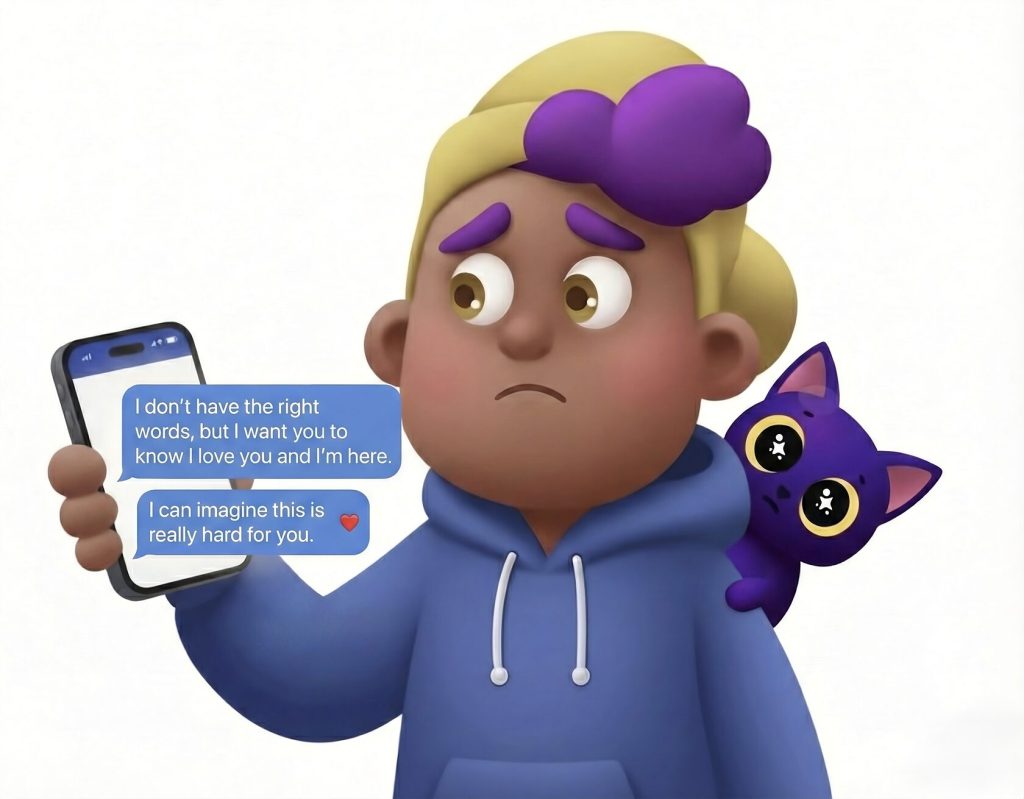
- Ethical Judgment & De-escalation: Knowing when to apologize, when to offer a concession, when to transfer to a specialist. Handling the raw, emotional human moments that no algorithm should navigate alone.
- Building Trust: At the end of the day, people build rapport with people. That trust is the foundation of loyalty, especially in B2B or high-stakes support scenarios.
A Day in the Life: The Integrated Workflow in Action
Imagine a tier-2 technical support agent, Sam. A ticket comes in: “Our entire inventory sync has failed, and orders are dropping.” High stress. Here’s how the integrated workflow might play out.
| Step | AI Co-pilot Action | Human Agent (Sam) Action |
| 1. Ticket Intake | Analyzes description, tags it as “P1 – Sync Error,” links to similar past incidents, and pre-fills a diagnostic template. | Reviews the AI’s summary, senses the urgency, and immediately connects with the customer via their preferred channel. |
| 2. Initial Diagnosis | Suggests checking three specific API error logs from the last hour and pulls the customer’s recent configuration changes into a side panel. | Asks the customer clarifying questions while simultaneously following the AI’s guided checklist. Validates the AI’s findings. |
| 3. Solution Building | Flags that a recent platform update caused a known conflict with a specific legacy API setting. Surfaces the internal engineering fix and a temporary workaround. | Evaluates both solutions. Decides the workaround is fastest for the customer. Crafts a clear, compassionate explanation—translating tech jargon into plain language. |
| 4. Resolution & Follow-up | Drafts the step-by-step resolution email, logs all actions, and suggests scheduling a follow-up check in 24 hours. | Personalizes the email, adds a note taking ownership, and approves the follow-up. Uses the saved time to call the customer for a quick reassurance. |
See the synergy? Sam wasn’t replaced. Sam was augmented. The cognitive load was lighter. The speed was higher. The customer felt heard and helped efficiently. That’s the goal.
Navigating the Integration Pitfalls (It’s Not All Smooth Sailing)
Of course, stitching AI and human intelligence together isn’t just a plug-and-play dream. There are real challenges in building these complex support workflows. For one, agents can suffer from “automation bias”—trusting the AI’s suggestion even when their gut says it’s wrong. You need a culture that values human oversight.
Then there’s the knowledge base problem. An AI co-pilot is only as good as the data it’s fed. Garbage in, garbage out, as they say. Maintaining a single source of truth is suddenly a critical business operation, not just an IT afterthought.
And perhaps the biggest hurdle: change management. Agents might fear the tech. The key is to frame the AI as the ultimate assistant that handles the tedious work, freeing them up for the interesting, high-judgment tasks that likely drew them to support in the first place.
The Future is a Conversation, Not a Handoff
The most advanced integrations are moving beyond the co-pilot just “suggesting” things. The future is a fluid conversation. The agent might ask the co-pilot, “What changed in their environment last night?” or “Show me the compliance implications of solution B.” The boundary between user and tool blurs into a true partnership.
This evolution turns the support agent from a reactive problem-solver into a proactive consultant. Their role becomes more strategic, more satisfying. Honestly, it elevates the entire profession.
So, where does this leave us? The integration of AI co-pilots and human agents isn’t a tech trend; it’s a necessary evolution. As our digital systems grow more complex, the support structure must evolve in tandem. It’s about creating a safety net of intelligence—both artificial and human—that ensures no customer feels lost in the maze, and no agent feels overwhelmed by the noise.
The best support experiences of tomorrow won’t be silent or purely automated. They’ll be distinctly, reassuringly human—just amplified by a quiet, relentless intelligence working in the background. And that’s a combination that’s very hard to beat.