Payroll fraud is a sneaky beast. It doesn’t announce itself with a bang, like a stolen laptop or a forged check. Instead, it bleeds out slowly — a phantom employee here, a few extra overtime hours there. By the time most companies notice, the damage is already done. And honestly? Traditional forensic accounting methods just aren’t cutting it anymore. They rely on sampling, hunches, and a whole lot of manual spreadsheet slogging. That’s where artificial intelligence steps in, not as a magic wand, but as a relentless, pattern-spotting machine that never sleeps.
Let’s be real — payroll fraud is more common than you’d think. The Association of Certified Fraud Examiners (ACFE) consistently finds that payroll schemes account for a solid chunk of occupational fraud cases, with median losses in the six-figure range. And the kicker? The average scheme runs for 18 to 24 months before anyone catches on. That’s a long time for cash to leak out the back door.
Why Old-School Forensic Accounting Falls Short
For decades, forensic accountants did their best with what they had. They’d pull random payroll samples, run basic ratio analyses, and maybe — if they were feeling spicy — compare a few employee records against HR files. But here’s the problem: sampling is like checking five apples in a barrel and assuming the rest are fine. Fraudsters know this. They hide in the 99% that never gets reviewed.
Plus, the classic red flags — duplicate addresses, missing Social Security numbers, unusual overtime spikes — are easy to spot when you’re looking at 200 records. But what about 20,000? Or 200,000? The human brain just… gives up. That’s not a failure of effort; it’s a failure of scale. And that’s precisely the gap AI is designed to fill.
How AI Actually Works in Forensic Accounting (Without the Hype)
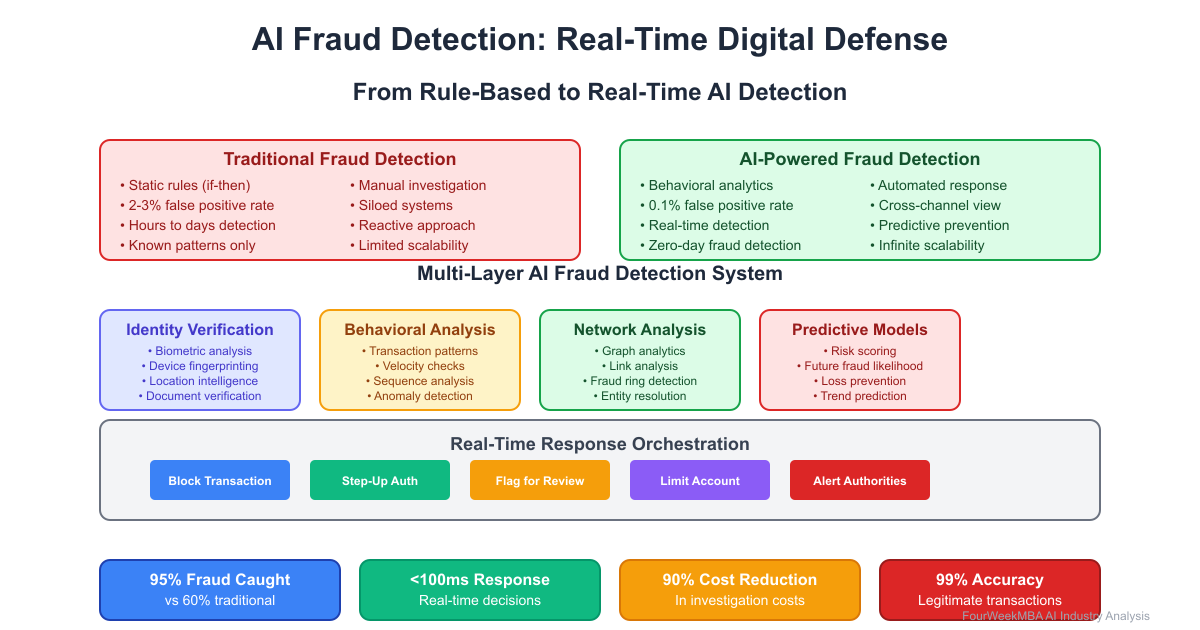
Alright, let’s strip away the buzzwords. When we talk about AI in payroll forensics, we’re really talking about three core capabilities: machine learning for pattern recognition, anomaly detection via statistical modeling, and natural language processing for unstructured data like emails or timesheet notes. Each one tackles a different angle of the fraud triangle.
Think of it this way — a human auditor might notice that one employee’s overtime seems high. An AI system notices that the same employee’s overtime always occurs on the same weekdays, aligns perfectly with a specific supervisor’s approval pattern, and matches a timesheet entry that was edited 17 minutes after submission. That’s not just a red flag; that’s a red parade.
Specific AI Techniques That Catch Payroll Fraud
Let’s get into the weeds a bit. Here’s what’s actually being deployed in the field right now, and it’s pretty damn impressive.
1. Anomaly Detection on Time and Attendance Data
This is the bread and butter. AI models are trained on historical attendance data to learn what “normal” looks like for each employee, team, and shift pattern. Once that baseline is established, the system flags anything that deviates — even subtly. We’re not just talking about someone clocking in at 3 AM. We’re talking about micro-patterns, like an employee who consistently clocks out 4 minutes late on Fridays, which adds up to 16 extra minutes of overtime per week. Multiply that by 52 weeks and… well, you get the picture.
The beauty here is that the model learns and adapts. It doesn’t rely on static rules. So if a legitimate policy change happens (like a new shift schedule), the algorithm adjusts. It’s not crying wolf every other week.
2. Network Analysis for Phantom Employees
Phantom employees — fake people on the payroll — are a classic scheme. And they’re surprisingly hard to catch with manual review. But AI uses something called network analysis to map relationships between data points. For example, a real employee might share a bank account with a phantom employee. Or a phantom employee’s address might match the HR manager who approves new hires. The AI doesn’t just look at individual records; it looks at the connections between them.
It’s like a spider sensing a vibration in the web. You might not see the fly, but you know something’s off because the silk moved in an unnatural way.
3. NLP for Unstructured Data
Here’s the thing — a lot of fraud evidence lives in emails, Slack messages, or even the notes field in a timesheet system. Traditional audits ignore this because it’s too messy to parse. But natural language processing (NLP) can scan thousands of messages for sentiment, urgency, or keywords that correlate with fraudulent behavior. Phrases like “just approve this one,” “forget the documentation,” or “we’ll fix it next month” get flagged for human review.
It’s not about reading everyone’s private messages — it’s about identifying risk patterns that would otherwise be invisible.
Real-World Example: The Case of the Too-Friendly Supervisor
I remember reading about a mid-sized manufacturing firm that had a supervisor who was, well, too popular. His entire team had perfect attendance, zero complaints, and consistently hit their production targets. Sounded great, right? But an AI system flagged something odd — his team’s overtime was always approved within 30 seconds of submission, and the hours were suspiciously round numbers (2.0, 4.0, 6.0). No one works exactly 2.0 hours of overtime every single day.
Turns out, the supervisor was running a kickback scheme. He’d approve fake overtime for his crew, and they’d split the extra pay with him. The total? Over $180,000 in two years. A manual audit might have caught it eventually, but the AI caught it in three weeks.
Where AI Still Needs a Human Touch
Now, let’s pump the brakes for a second. AI isn’t infallible. It generates leads, not convictions. A flagged anomaly might just be a data entry error, a legitimate one-off, or a new hire who genuinely works weird hours. That’s why the best practice is a hybrid approach: AI does the heavy lifting of triage, and human forensic accountants do the deep dive.
Also, there’s the false positive problem. If your AI flags 500 transactions a week, and 490 of them are false alarms, your team will get fatigued. That’s why tuning the model matters more than the model itself. It’s a constant calibration dance.
Implementation Challenges You Shouldn’t Ignore
Let’s be honest — rolling out AI in a payroll department isn’t a walk in the park. Here’s what tends to trip people up:
- Data quality: AI is only as good as the data it feeds on. If your payroll system is a mess of legacy formats, duplicate entries, and missing fields, expect garbage output.
- Integration: Your AI tool needs to talk to your HRIS, your time-tracking software, and your accounting system. That’s not always a smooth handshake.
- Resistance to change: Payroll staff might feel like the algorithm is questioning their competence. It’s not. It’s doing the boring stuff so they can do the interesting stuff.
- Cost: Enterprise-grade AI tools aren’t cheap. But honestly, neither is a $500,000 fraud scheme that runs for two years.
That said, there are now more accessible options — cloud-based forensic accounting platforms that offer AI modules on a subscription basis. You don’t need to build a custom neural network from scratch in your basement.
Building a Proactive Payroll Fraud Defense
Here’s the shift in mindset that matters most. Traditional forensic accounting is reactive — you wait for a tip, then investigate. AI allows you to be proactive. You’re not waiting for a whistleblower; you’re actively scanning for statistical improbabilities every single pay cycle.
Think of it like a home security system. You don’t install cameras after a burglary and say, “Well, that’s done.” You keep them running 24/7. AI-powered payroll monitoring is the same — it’s continuous, automated, and a little bit paranoid. And in the world of fraud detection, paranoia is a feature, not a bug.
One more thing — don’t forget the importance of deterrence. When employees know that AI is watching for anomalies, fraud attempts drop significantly. It’s the same psychology as a speed camera. You drive slower when you know it’s there, even if it’s not actively flashing.
The Road Ahead for Forensic Accounting
We’re moving toward a future where AI doesn’t just detect fraud — it predicts it. Predictive models can analyze behavioral shifts over time (like an employee who suddenly starts working late after years of strict 9-to-5) and flag them before any money changes hands. That’s not science fiction; that’s the next iteration of what’s already being built.
But let’s not get too carried away. The human element remains irreplaceable. AI can tell you where to look, but it can’t tell you why someone committed fraud, or how to interview a suspect without tipping them off. Forensic accountants who embrace AI as a partner, rather than a replacement, will be the ones who thrive.
In the end, payroll fraud is a battle of attention. Fraudsters rely on being overlooked. AI makes that nearly impossible. And that’s a win for every honest employee, every shareholder, and every business that just wants to pay people fairly — and only the people who actually work there.
So, the next time you hear about a company losing six figures to a phantom employee scheme, don’t shake your head in disbelief. Ask yourself — what would their anomaly score have looked like? Because in the age of AI-driven forensics, the only thing more expensive than investing in detection is the cost of staying blind.